Quick Answer: Does High Blood Pressure Cause Symptoms?
Usually, no. Most people with high blood pressure (hypertension) have no symptoms at all, even when their readings are well above normal. Symptoms such as severe headache, chest pain, shortness of breath or vision changes tend to appear only when blood pressure is dangerously high, and they can have other causes. The only reliable way to know your blood pressure is to measure it.
This article is part of our complete high blood pressure guide.
Key Takeaways
- High blood pressure is often silent, so feeling well does not mean your readings are healthy.
- Symptoms can appear when blood pressure is severely high, above 180/120 mmHg.
- Nosebleeds, flushing and mild headaches are not reliable signs of hypertension.
- Regular checks matter more than watching for symptoms, especially if you have risk factors.
- Chest pain, trouble speaking, weakness, numbness or sudden vision changes need emergency care.
Why High Blood Pressure Is Often Called a “Silent” Condition
Blood pressure rises slowly, often over years. Your body adapts to the gradual change, so you may not feel anything while the extra force quietly strains your arteries, heart, brain, kidneys and eyes.
This is why many people first learn they have hypertension during a routine check, a pharmacy screening or a visit for another problem. By then, the condition may have been present for a long time. Early detection gives you more time to act, which is why regular readings are so valuable.
High Blood Pressure Symptoms That Can Appear at Very High Levels
When blood pressure becomes severely high, some people notice symptoms. These are not specific to hypertension, so they should never be used to diagnose it. They are, however, a reason to check your reading and speak to a healthcare professional.
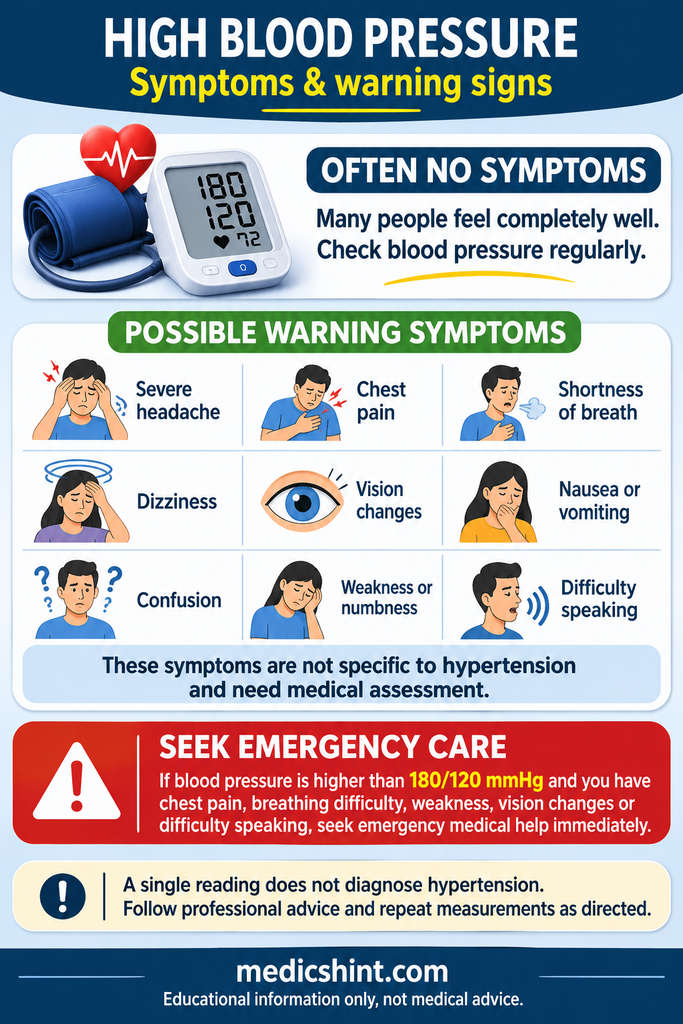
| Symptom | What to know |
|---|---|
| Severe headache | More likely to be linked to very high readings than a mild or occasional headache |
| Chest pain | Can signal strain on the heart and needs urgent assessment |
| Shortness of breath | May occur when the heart or lungs are under strain |
| Vision changes | Blurred vision or sudden changes can reflect pressure effects on blood vessels in the eyes |
| Dizziness or confusion | Can occur with very high pressure or other serious conditions |
| Weakness or numbness | Especially on one side of the body, which can be a stroke warning sign |
| Difficulty speaking | Needs emergency care, even if it passes |
| Irregular or pounding heartbeat | Has many causes, so it should be checked |
If you have any of these symptoms together with a very high reading, read our guide to hypertensive crisis warning signs right away.
Symptoms That Do Not Reliably Signal High Blood Pressure
Some beliefs about hypertension are common but misleading. Many people with high blood pressure never have them, and many people with these symptoms have normal blood pressure.
- Nosebleeds. Most nosebleeds are caused by dry air, irritation or minor injury, not hypertension.
- Facial flushing. Redness from heat, emotion or exercise does not mean your blood pressure is high.
- Mild or occasional headaches. These are very common and usually have other causes.
- Feeling stressed or anxious. Stress can raise blood pressure temporarily, but feeling tense does not prove you have hypertension.
- Feeling fine. This is the most important myth. A person can feel completely well while blood pressure stays high.
The lesson is the same each time: judge your blood pressure by measuring it, not by how you feel.
Hypertensive Crisis Warning Signs: When Symptoms Mean Emergency
A hypertensive crisis is a reading higher than 180 systolic and/or 120 diastolic. Follow these steps:
- Rest quietly and measure again after at least one minute.
- If the repeat reading is still that high and you have chest pain, shortness of breath, weakness, numbness, vision changes, difficulty speaking or another worrying symptom, seek emergency medical care immediately.
- If the reading is still that high but you have no worrying symptoms, contact a healthcare professional promptly for urgent guidance.
Do not take extra medicine or try to lower your pressure quickly unless a healthcare professional tells you to. Our full guide on hypertensive crisis warning signs explains what to expect in an emergency department.
Who Should Check Blood Pressure More Often?
Because symptoms are unreliable, regular screening is most important if you have any of these risk factors:
- A family history of high blood pressure
- Diabetes or kidney disease
- Excess body weight or low physical activity
- A high-sodium diet or regular heavy alcohol use
- Heavy snoring or suspected sleep apnoea
- Pregnancy, or a history of high blood pressure in pregnancy
- Age over 40 (risk rises with age)
See our full list of hypertension causes and risk factors to understand your own risk.
How to Check Your Blood Pressure Properly
Accurate readings help you and your doctor make better decisions. To get a reliable home reading:
- Avoid smoking, caffeine and exercise for 30 minutes beforehand.
- Empty your bladder, then sit quietly for at least five minutes.
- Sit with your back supported, feet flat on the floor and legs uncrossed.
- Use a properly sized cuff on your bare upper arm, held at heart level.
- Do not talk during the reading.
- Take two readings about one minute apart and write both down.
Compare your numbers with our normal blood pressure chart, and bring your log to your appointment.
What to Do If You Think You Have High Blood Pressure
- Measure it correctly on at least two different days.
- Book a visit with a doctor or pharmacist if readings are repeatedly 130/80 mmHg or higher.
- Start with healthy habits such as less sodium, regular activity and limited alcohol. See how to lower blood pressure naturally.
- Ask about treatment. Some people also need blood pressure medications, and your doctor can advise you.
- Keep taking prescribed medicine unless a healthcare professional tells you otherwise.
High Blood Pressure Symptoms FAQs
Can you feel high blood pressure?
Usually not. Most people feel normal even with high readings. Only a measurement can confirm blood pressure.
What are the first signs of high blood pressure?
Often there are none. When symptoms do appear, they tend to happen at very high readings and may include severe headache, chest pain, shortness of breath or vision changes.
Does high blood pressure cause headaches?
Mild headaches are rarely caused by hypertension. A sudden severe headache with a very high reading needs prompt medical attention.
Can anxiety cause high blood pressure symptoms?
Anxiety can raise blood pressure temporarily and cause a pounding heart. If readings stay high when you are calm, speak with a healthcare professional.
How do I know if my blood pressure is high without a monitor?
You cannot tell reliably without measuring. Many pharmacies, clinics and community health events offer free or low-cost checks.
When is high blood pressure an emergency?
When a repeat reading is higher than 180/120 mmHg and you also have chest pain, shortness of breath, weakness, numbness, vision changes or difficulty speaking. Seek emergency care immediately.
Related Guides
- High blood pressure (hypertension): complete guide
- Hypertension causes and risk factors
- Normal blood pressure chart
- Hypertensive crisis warning signs
- How to lower blood pressure naturally
- Prevent high blood pressure
Medical Disclaimer
This article provides general educational information and is not a substitute for professional medical advice, diagnosis or treatment. Symptoms can have many causes. Consult a qualified healthcare professional about your readings, symptoms and health needs. Seek emergency care for symptoms that may indicate a medical emergency.
Sources
This article draws on general guidance from the World Health Organization, the American Heart Association and MedlinePlus. Add linked citations here later, when you are ready to include external links.